
Managing Synthetic Media Personalities: Causes, Solutions & Best Practices - 2023 Guide
Synthetic media personalities are transforming the digital influence landscape with their potential for creative content creation. However, implementing and managing these virtual entities can present several technical challenges. In this article, we'll explore these challenges and provide actionable solutions to manage synthetic media personalities effectively.
Causes of Challenges in Synthetics Media Personalities
- Model limitations: Generative models like Stable Diffusion might lack fine-tuned parameters for ideal results.
- Prompt structure issues: Crafting the right prompt can be tricky, affecting the output quality significantly.
- Inconsistent parameter settings: Variations in CFG scale and seed values can lead to unpredictable outcomes.
- Training constraints: Lack of LoRA training or comprehensive datasets can limit the potential of generative models.
Solutions for Managing Synthetic Media Personalities
- Customize your model parameters: Introduce LoRA training to refine specific aspects of the model's performance.
Steps:- Select areas where the AI needs improvement.
- Apply LoRA training to these sections with relevant datasets.
- Evaluate and adjust configurations as needed for optimal results.
- Refine prompt structure: Ensure that prompts are clear, concise, and detailed. Use structured input to achieve desired outputs.
Suggestions:- Incorporate specific characteristics like colors or poses.
- Aim for clarity in wording to avoid ambiguity.
- Test multiple prompts to find the most effective one.
- Optimize CFG scale and seed values: Experiment with these settings to achieve desired outcomes without compromising quality.
Tips:- Start with default settings and gradually adjust.
- Monitor the output for consistency.
- Document changes to avoid future inconsistencies.
Best Practices for Working with Artificial Influencers
- Iteratively improve over time: Regularly update and fine-tune your models based on performance feedback.
- Set clear expectations: Discuss outputs with stakeholders to ensure alignment.
- Document processes: Maintain a log of changes, settings, and outcomes for transparency and reproducibility.
Common Mistakes When Managing Synthetic Media Personalities
- Failing to customize LoRA training adequately.
- Ignoring prompt details leading to suboptimal results.
- Poor parameter settings that affect output quality unexpectedly.
Frequently Asked Questions (FAQ)
- Q: How do I troubleshoot inconsistent outputs?
A: Review your LoRA training, prompt structure, and parameter configurations. Test different settings to identify the root cause. - Q: What are some tips for effective LoRA training?
A: Keep datasets relevant and diverse. Monitor performance closely during training. Adjust based on feedback loops from test runs. - Q: How important is the prompt structure in generating synthetic media personality content?
A: Very crucial; a well-structured prompt ensures accurate and consistent results, reducing guesswork.
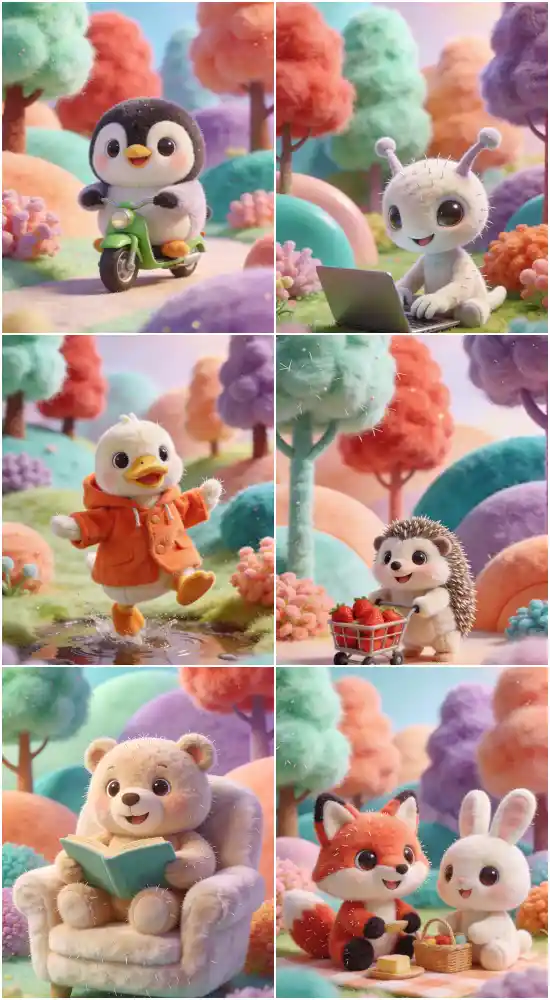
Featured Resource Highlight - Fluffy 3D Fantasy Character AI Prompt
- Premium quality AI-generated assets tailored for creative professionals.
- Whimsical toy style illustrations that can be customized to fit specific needs.
- Digital download format for seamless integration into various projects.
In conclusion, managing synthetic media personalities requires a blend of technical expertise and creativity. By following the solutions and best practices outlined here, and utilizing tools like Fluffy 3D Fantasy Character AI Prompt, you can effectively harness their potential to create compelling content that captivates audiences.